Reflections on Bishop Burbidge’s Pastoral Letter “The Divine Physician”
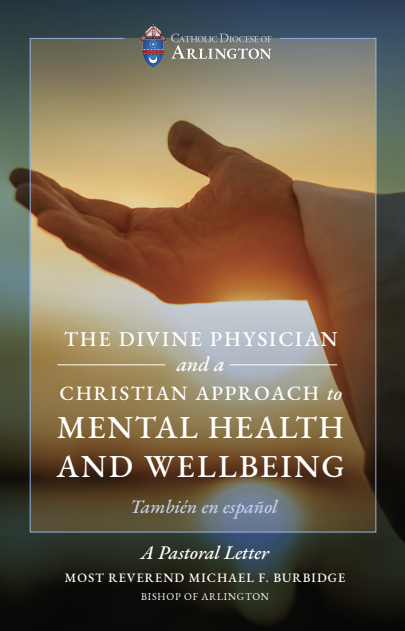
Recently, Bishop Burbidge of the Diocese of Arlington wrote a pastoral letter entitled “The Divine Physician.”
Summary of the Letter
Bishop Burbidge begins his letter with the foundational message — Jesus is the source of all healing as our Divine Physician. From multiple examples found in Scripture regarding Jesus’ healing power, we are reminded by our shepherd that “the Church follows our Lord in emphasizing the primacy of spiritual healing, the importance of faith in God, and fidelity to his commands as the key for everlasting salvation.”
Bishop Burbidge cites various research to show that much of why there is a mental health crisis points back to issues in family life and a subsequent struggle to develop a sense of purpose. He proposes the solution to regain a relationship with God and foster freedom for virtue and excellence. This corresponds to distinctly Catholic models of psychology, spiritual direction, and accompaniment. Bishop Burbidge recommends community and Sacraments in order to flourish in this direction. He acknowledges that these can seem more overwhelming at times for those with significant mental health struggles (e.g., “depression, anxiety, or trauma”), so he explicitly recommends seeking professional counseling in this letter. More explicitly, he details the qualities of Christian counseling:
“A good counselor will have a Christian understanding of the world and of the human person rather than a secular one: that persons are oriented to God, to authentic human relationships, and to the practice of the virtues …”
Finally, Bishop Burbidge reminds us that suffering can be redemptive and that we are called to accept our crosses while at the same time striving for holiness which is our ultimate happiness.

Young men at a Confirmation retreat for All Saints Catholic Church in Manassas, Virginia.
Community
Mental health is a complex issue and cannot be comprehensively addressed in a pastoral letter. Even the issues of depression and anxiety are compounded by other conditions such as neurological and developmental disorders. However, the bishop gets us back to basics.
We all need community. However, are we community to those who need it most? In youth and young adult ministry, it is not always clear which child is in need of active presence and a safe environment in which to openly share. Sometimes it is very clear who that person is.
As Youth Apostles, we seek to foster community among young people. We don’t want the focal point to be on the youth ministry leader. We want them looking at Jesus and at each other — to be friends towards one another. However, we are still responsible for modeling that kind of brotherly and sisterly love since caring adults bear the responsibility of representing God’s love.
It is beneficial, therefore, to understand psychological well-being through the lens of how we grow in our childhood and adolescence with a specifically Catholic understanding of the human person. Since Youth Apostles was founded by a Catholic psychologist, we can apply the advice of Bishop Burbidge with our Founder’s understanding of healthy development of the intellect and heart.
Intellect: Trust —-> Security —> Openness —> Truth
Heart: A sense of belonging —> A proper sense of self-worth —> A sense of otherness —> Care (Love)
Community brings us to this sense of truth and care which help us to live in freedom (described later). It would be remiss to not mention the danger that social media can present to young people in presenting a false sense of community while worsening experiences of loneliness and self-hatred as well as sins of anger, envy, and lust. Community should ideally be in-person and built through individual relationships — heart-to-heart.
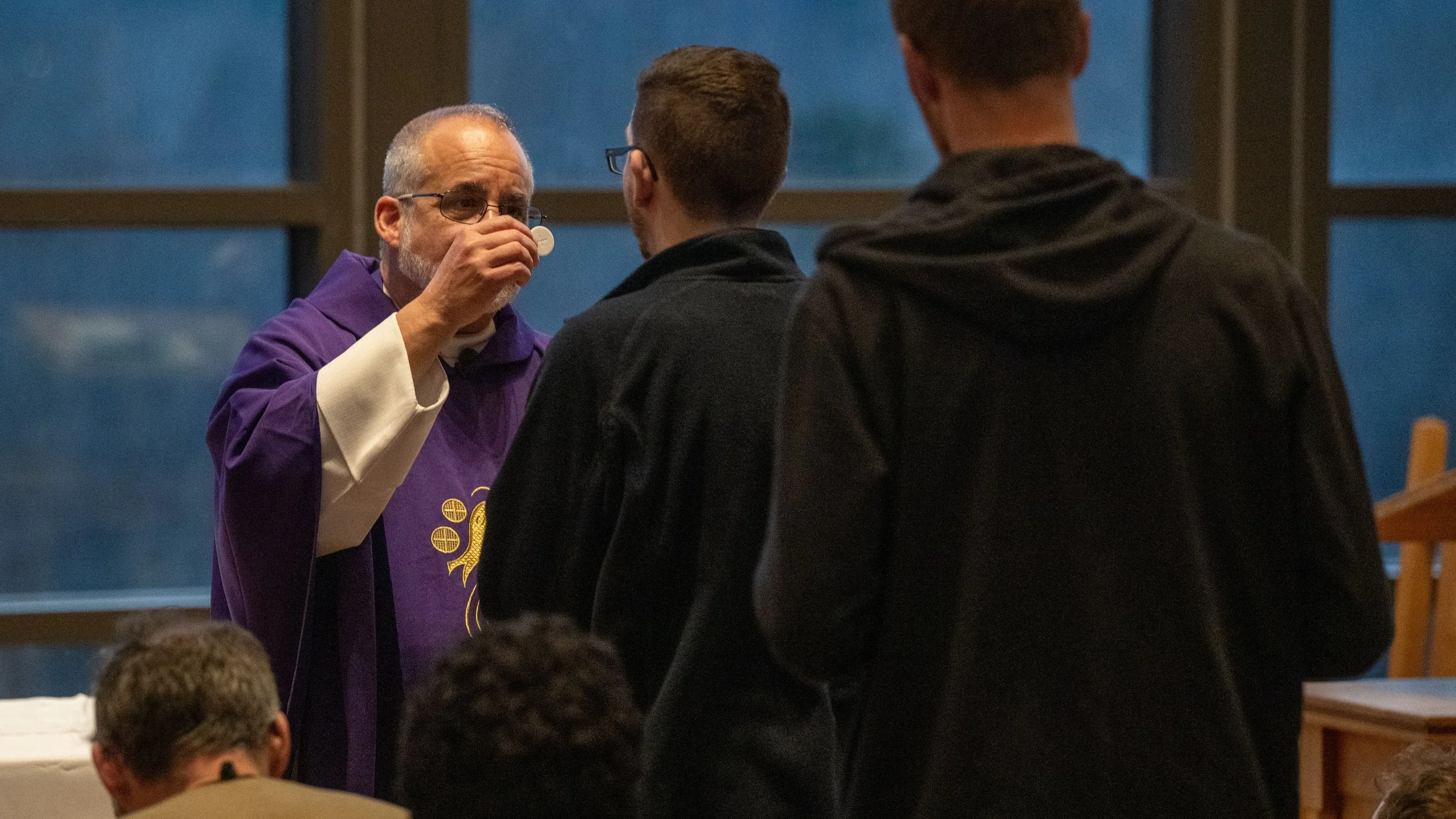
Fr. Peter Nassetta, YA distributing the Eucharist at a Youth Apostles Annual Retreat.
Sacraments
We also need grace. Truth, freedom, and care make us more ready to receive the gifts of faith, hope, and charity we need from Christ Jesus our Lord. In receiving these graces, the Bishop reminds us to avail ourselves of the sacraments of Reconciliation and of the Eucharist. Do we introduce young people to the Divine Physician in a personal relationship with Him?
Virtue
Lastly, to live in freedom, we must make responsible choices so that we can grow in virtue (the habit of doing what is good). Parallel to how our mind and heart develop, our Founder shows how the will develops with the following:
Will: Tolerating our frustration —> Self-discipline —> Responsible choices —> Freedom
Our ministry should always include forming young people in morals and self-discipline of the will. Freedom for excellence and freedom from sin in this way will act as a preventative measure against significant mental health crises, but more positively this freedom will help us flourish, accept our crosses, and (as our Bishop so often shares as his episcopal motto) “walk, humbly with our God.”
Resources
If you or someone you know is in need of mental health support, Bishop Burbidge’s letter includes the following:
CatholicTherapist.com – A national directory of mental health professionals screened for faithful adherence to the Magisterium of the Church.
Catholic Psychotherapy Association – A professional organization created to support mental health practitioners by promoting the development of psychological theory and mental health practice which encompasses a full understanding of the human person, family, and society in fidelity to the Magisterium of the Catholic Church.
Divine Mercy University – An international center for the scientific study of psychology with a Catholic understanding.
National Catholic Mental Health Campaign - A year-round initiative of the United States Conference of Catholic Bishops (USCCB) to encourage all people of good will to respond to the ongoing mental health crisis across the United States.